

What Is MES? Do You Need Full-Blown MES or Scalable MES Functionality?
Blog
What Is MES?
A manufacturing execution system (MES) is software that connects your shop floor to the rest of your business. It sits between your automation layer (PLCs, SCADA, sensors) and your enterprise systems like ERP, capturing real-time production data and turning it into decisions, records, and results.
MES has a lot of facets. It covers quality management, OEE and efficiency tracking, material traceability, production scheduling, cost control, ERP connectivity, and more. A full MES implementation touches all of these. It is a production information system that gives every role in the plant access to the data they need to do their job.
Here is the honest question most manufacturers need to answer: do you need a full-blown MES, or do you need MES functionality?
The distinction matters. A full MES is a significant commitment in time, budget, and organizational change. Many manufacturers are not ready for that, and that is fine. But if you are not going to implement a full MES, you still need some level of MES functionality. You need it. Downtime tracking. Quality management. Overall production tracking. ERP connectivity. These are not optional capabilities for a modern manufacturing operation. They are the minimum.
Running a plant without basic MES functionality means your operators are recording data on paper. Your quality team is investigating problems after the fact. Your maintenance crew is guessing when equipment needs attention. Your plant manager is reviewing yesterday’s numbers to make today’s decisions. Your ERP has no idea what is happening on the floor until someone types it in.
At its core, MES functionality equals a production information system. It answers the questions every manufacturer needs answered in real time: what are we making, how well are we making it, what is it costing us, and where are we losing time and money.
INS3’s approach is scalable MES. Start with the functionality that solves your most pressing problem. Prove value in 2 to 4 weeks on a single line. Expand from there. Every implementation stands alone and enables what comes next.
Core MES Functionality
MES covers a broad set of production management capabilities. Understanding what each function delivers helps you choose where to start.
Quality management. MES captures inspection data at defined process steps, enforces specification checks, and flags deviations before they become defects or customer returns.
Efficiency and OEE. MES calculates overall equipment effectiveness, cycle times, downtime reasons, and yield rates from live data. No more end-of-shift manual estimates.
Traceability and genealogy. Every component, material lot, operator action, and machine state is recorded against the product being made. Full production history for every unit.
Production execution. Work orders flow from ERP into MES, get dispatched to the floor, tracked in real time, and confirmed back to the enterprise system.
Scheduling. MES provides real-time production status that feeds back to scheduling systems, so planners work from current state instead of yesterday’s numbers.
Cost control. Material consumption, labor hours, scrap quantities, and energy usage tie directly to production orders. Cost-per-unit becomes visible in real time rather than approximated at month end.
ERP connectivity. Order confirmations, material consumption, labor hours, and scrap quantities flow back to ERP automatically. No double entry. No transcription errors. The business system and the production system reflect the same reality.

Quality: From Detection to Prevention
Quality teams in most plants spend the majority of their time finding problems after they have already occurred. MES shifts the balance toward prevention.
When MES is connected to inspection stations, process sensors, and operator input, quality data is captured continuously rather than sampled at the end of a run. Statistical process control runs against live data. When a process parameter begins drifting toward an out-of-spec condition, the system flags it while there is still time to correct, before a defective product is made.
Traceability (a compliance requirement in food and beverage, pharma, and medical device manufacturing) becomes automatic. Every production record, ingredient lot, machine state, and operator action is logged against the finished product. Audit preparation that once took days takes hours. Recall investigations become a query instead of a manual cross-referencing exercise.
INS3 has seen quality teams cut their reporting time by 40% or more after MES implementation. They did not stop tracking quality. The system tracked it for them, freeing their time for actual quality improvement.
Maintenance: From Reactive to Condition-Based
Maintenance teams operate in one of two modes: reactive (responding to failures after they happen) or preventive (performing work on a fixed calendar regardless of actual equipment condition). Both modes waste resources.
MES changes this by connecting maintenance workflows to actual production and equipment data. When a machine’s cycle time degrades, its reject rate increases, or a sensor reading crosses a threshold, MES triggers an alert or creates a work order in your CMMS before the equipment fails.
The result is condition-based maintenance: work performed when the data says it is needed, not when the calendar says it is due. INS3 has helped manufacturers achieve 50% reductions in unnecessary work orders by connecting SCADA data into MES and routing condition-based triggers directly to maintenance scheduling.
MES also preserves institutional knowledge. The failure modes that experienced technicians recognize by sound or feel get encoded as thresholds and patterns in the system. That knowledge becomes available on every shift, not only when those technicians are on the floor.
Operators and Efficiency: Real-Time Data in the Hands of the People Who Know the Process
Operators have the process knowledge. They know what a line sounds like when it is running well and what changes when something starts to drift. What they often lack is real-time data that confirms what they sense and helps them act faster.
MES puts real-time production data and process data together in front of operators at the point of work. Visual indicators show current status and targets. The operator sees not only what the process is doing right now but also how it relates to the production target, the quality spec, and the shift goal.
MES also gives operators a direct way to input data that drives decision-making across the plant. Quality reason codes, waste reason codes, downtime classifications, shift logs, production notes. Instead of writing on clipboards or filling out spreadsheets after the fact, operators log this information in real time through touchscreen interfaces designed around their workflow. Pre-configured reason codes replace free-text fields so the data is consistent and usable. Every quality event, every waste event, every shift note becomes part of the production record the moment it happens.
This is a combination of real-time SCADA data and MES production data working together. When a cycle time drifts or a reject rate ticks up, operators see it as it happens and have the context to adjust the process because they have both the data and the process knowledge. The data they input feeds back into quality analysis, OEE calculations, and root cause investigations for every other team in the plant.
A cheese processing manufacturer INS3 worked with found that connecting operators to real-time production data contributed to a 20% production capacity increase without adding equipment. The insights were already there. The system to surface them to the people who could act was what was missing.
Scheduling and Cost Control: Planning With Real Data
Scheduling is planning something without knowing exactly what is going on. That is the problem MES solves. And it is not limited to the plant floor scheduler. The real-time production data MES provides feeds advanced planning and supply chain decision-making across the organization.
Without MES, schedulers and planners work from end-of-day summaries, spreadsheets, and assumptions. The supply chain team commits delivery dates based on theoretical capacity. The production planner sequences work orders based on yesterday’s output rates. When a line goes down or a product runs long, the ripple effect through the supply chain is invisible until it becomes a missed shipment.
MES changes this by providing real-time visibility into what is happening on the floor right now. Supervisors see a live view of every line and every work order. Bottlenecks surface as they develop. Schedulers work from actual production completion data and adjust during the shift when adjustments make a difference. Supply chain planners see real capacity and real output, not estimates, which means commit dates and material requirements reflect what the plant is producing today.
Plant managers see OEE calculated from actual machine data rather than estimated from shift logs. Downtime is categorized by root cause. Quality costs are visible in real time. Manufacturers running at what they believed was 75% OEE often discover actual OEE closer to 55% after MES implementation. That 20-point gap is an opportunity that was previously invisible.
At the enterprise level, MES standardizes measurement across sites. When every plant measures OEE the same way and captures downtime using the same taxonomy, corporate benchmarking reflects reality.
CoreM and the SCADA You Already Run
CoreM, INS3’s own MES, is not tied to any one SCADA platform. Where a plant runs Inductive Automation’s Ignition, INS3 builds on it: INS3 is a Gold Certified Ignition Integrator with hundreds of SCADA and MES implementations across food and beverage, pharma, and discrete manufacturing. Ignition’s unlimited licensing model means your MES scales across lines, areas, and sites without per-seat or per-tag cost increases. The Perspective module delivers operator interfaces on any device with a web browser. MQTT Sparkplug integration provides the backbone for Unified Namespace (UNS) architecture.
INS3 also works with FrameworX by Tatsoft and integrates CoreM with FrameworX at customer plants today. Our team also has deep experience with Aveva’s Wonderware (now AVEVA System Platform), Rockwell Automation’s FactoryTalk View, and Velotic’s Proficy platform including iFIX, CIMPLICITY, and Proficy Plant Applications. If your plant runs on one of these platforms, INS3 builds MES functionality on top of what you already have. We work with what you have. In some cases we enhance it with additional technology, but we do not require you to rip and replace your existing infrastructure.
CoreM: Lightweight MES That Combines Production and Process Data
CoreM is one example of the MES solutions INS3 deploys. It is a lightweight MES platform designed for manufacturers who need production visibility, OEE tracking, and downtime management without the complexity of a full MES deployment.
The strength of CoreM is combining production event data with process time-series data in a single view. Most MES platforms track production events: a batch started, a batch ended, a downtime event occurred. Most SCADA historians track process data: temperatures, pressures, speeds, flow rates over time. These two data sets typically live in separate systems.
CoreM brings them together. When a reject rate spikes, the operator and the engineer see the production event alongside the process conditions present at that moment: the temperature profile, the speed setpoint, the pressure trend. The correlation between what happened in production and what was happening in the process is visible without switching between systems or running a separate analysis.
This is where CoreM has a significant advantage. It gives operators and engineers the full picture in one place, enabling teams to move from reacting to problems to understanding why problems happen and getting ahead of them.
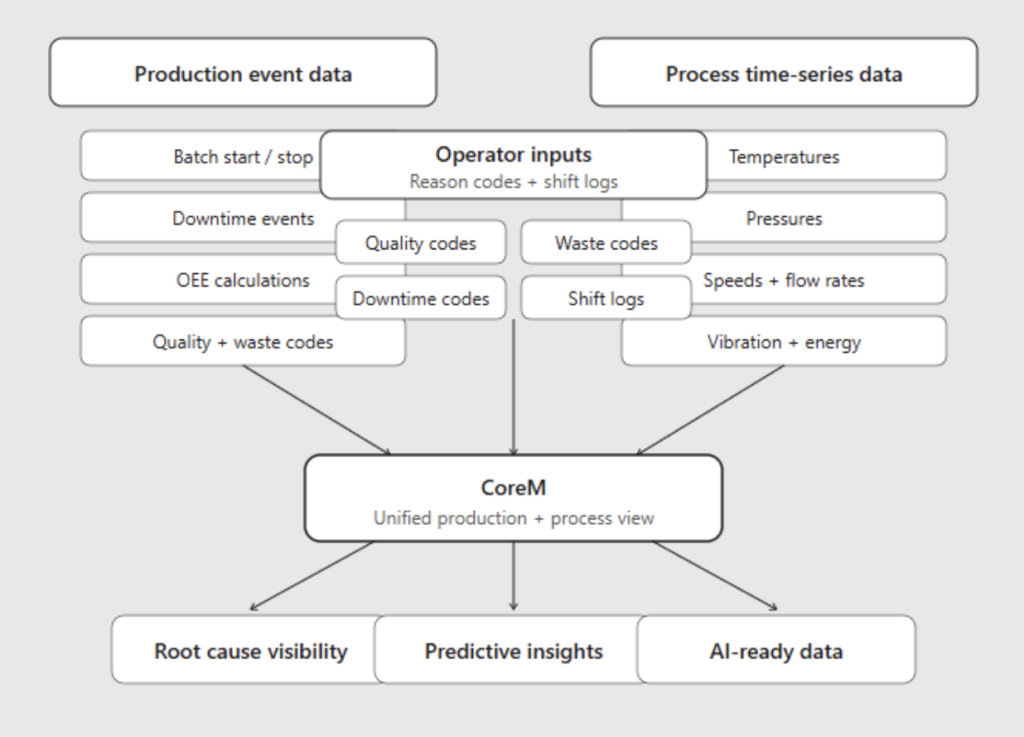
Making Your Data AI-Ready
Every MES implementation INS3 delivers is structured around the Unified Namespace. This is the architectural decision that separates MES projects that hit a ceiling from MES projects that become the foundation for everything that comes next.
In a UNS-based MES deployment, production data is published to a single, contextual data model accessible to any application. Your MES writes to the UNS. Your historian reads from it. Your analytics platform subscribes to it. Your AI models train on it. No point-to-point integrations. No data duplication.
Once your data is structured this way, you access it and ask questions of your production data directly. Show me every time reject rates exceeded 3% on Line 2 in the last 90 days and what process conditions were present. The system returns the answer because the production events and the process data are already connected and contextualized.
That is what AI-ready means in practical terms. It means structuring your data so analytics and machine learning give you insights into issues and problems you get ahead of and predict, instead of problems you discover after the damage is done. The MES generates the data. The UNS distributes it. AI consumes it.
INS3 builds every MES project on this architecture because the cost of retrofitting a data layer after the fact is 3 to 5 times the cost of building it correctly from the start.
What MES Implementation Looks Like
INS3’s approach: start with a focused assessment, build on what already exists, prove value at each step before expanding.
A targeted MES pilot on a single line delivers measurable results in 2 to 4 weeks and builds both the technical foundation and the organizational confidence to expand. A full MES solution takes longer, 3 to 8 months to roll out depending on scope. CoreM and INS3’s Ignition-based MES frameworks are designed for phased deployment: modular enough to start small, scalable enough to grow across a facility or an enterprise.
Frequently Asked Questions
MES (manufacturing execution system) is software that connects your shop floor automation to your business systems. It captures real-time production data and turns it into quality records, efficiency metrics, traceability documentation, scheduling inputs, and cost visibility. At its core, MES functionality equals a production information system. It scales from focused applications like downtime monitoring to full production execution across multiple sites.
A focused pilot on a single line deploys in 2 to 4 weeks. A full MES implementation across multiple areas takes 3 to 8 months depending on scope. INS3 phases every deployment so production is not disrupted.
INS3 offers a no-cost walkthrough or working session that starts with your specific challenge. From that conversation, you get an idea of budget in terms of dollars, time, and commitment. No proposal without understanding the problem first.
No. INS3 works with what you have. We build MES functionality on top of your existing automation infrastructure. In some cases we enhance it with additional technology, but we do not require a rip-and-replace. If you run FrameworX, Ignition, Wonderware, FactoryTalk, Proficy or other platforms, we connect to them through standard protocols and the UNS.
Yes. INS3 has deep expertise in Proficy Plant Applications as well as other current and legacy GE products including iFIX and CIMPLICITY. We work with existing Proficy installations to optimize, extend, and integrate them into modern data architectures. If you are running legacy GE systems and need to modernize or expand MES functionality, INS3 has the experience to help.
ERP manages business transactions: purchase orders, financial records, inventory levels, customer orders. MES manages production execution: how those orders get made on the floor, what happened during production, and how the equipment and people performed. MES feeds accurate production data back to ERP so both systems reflect reality.
MES generates clean, contextualized production data. When that MES is built on a UNS architecture, the data is accessible to analytics and AI tools without custom integrations. You ask questions of your production data directly and get insights into problems you predict and prevent, instead of problems you react to after the fact.
CoreM is a lightweight MES platform from INS3 that combines production event data with process time-series data in a single view. It deploys in weeks on Ignition infrastructure and provides OEE tracking, downtime management, and production visibility. Its strength is showing operators and engineers what happened in production alongside the process conditions present at that moment, all in one place.
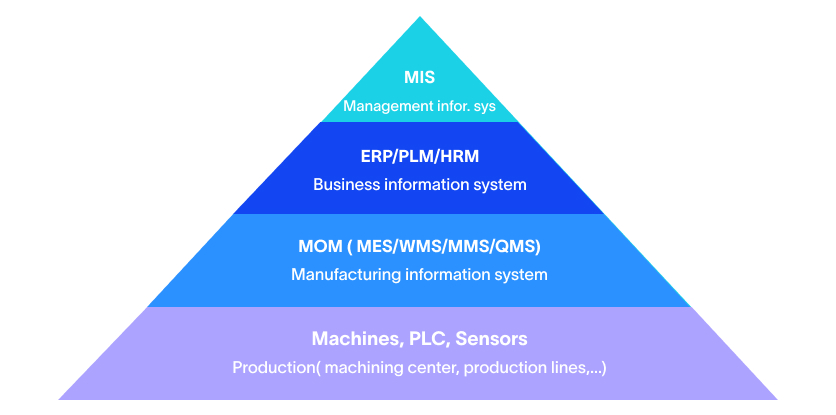
Agile MES: The Key to Unlocking Smart Manufacturing Success
MES is a computerized system used in manufacturing operations to track and document the transformation of raw materials into finished goods. An MES system typically manages and monitors work orders, equipment, materials, and personnel on the shop floor. The system provides real-time visibility into production processes, helps optimize manufacturing operations, and improves the overall efficiency of the manufacturing process.
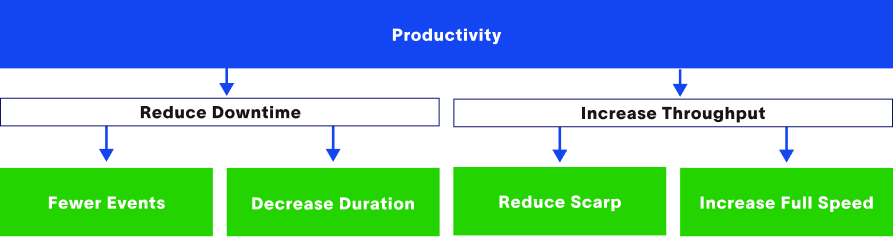
Understanding OEE: The Key to Manufacturing Efficiency
In today’s competitive manufacturing landscape, improving efficiency and productivity is crucial for businesses to remain competitive. One of the key metrics used to measure manufacturing efficiency is OEE or Overall Equipment Effectiveness. In this blog, we will take a closer look at OEE and its importance in manufacturing.
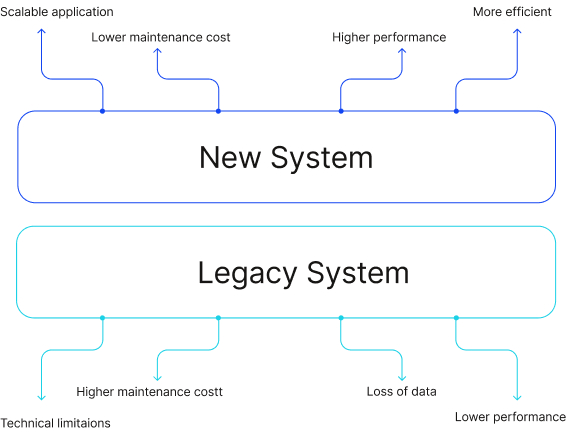
How to Effectively Conduct a Legacy System Integration
Legacy system integration can be a daunting task, but it’s a necessary one for many manufacturers that rely on outdated systems to run their business. Integrating legacy systems with modern technology can improve efficiency, streamline processes, and save time and money. However, it’s important to approach the integration process carefully and methodically to ensure success.
Share on :
Keep On Reading
Subscribe to Our Newsletter
Subscribe to our weekly newsletters to get updates regarding our new production, behind the scene process of our art creation and much more.
After submitting this form you will receive an e-mail with a confirmation link that you must click to complete your request. Detailed information on processing and cancellation can be found in our privacy policy.